Deep sky
Past the planets the distances are counted in light-years, and the subject changes from worlds to stars: where they form, how they end, and what they leave behind. Every picture here is real telescope data. I drew none of it. I wish I had.
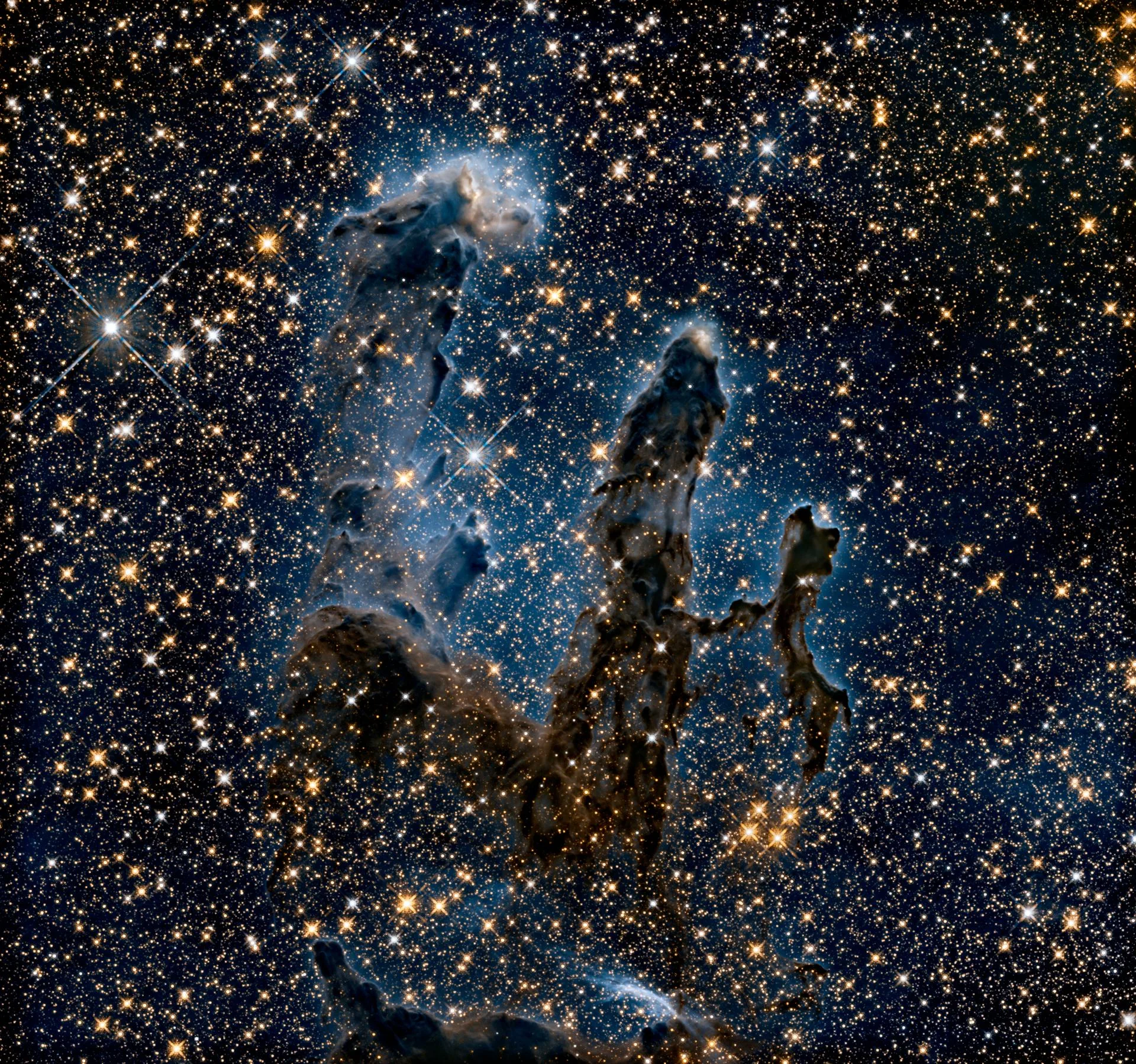
The “Pillars of Creation” in near-infrared light from the Hubble Space Telescope. Infrared passes through much of the dust, so stars behind and inside the pillars show; new stars sit in their tips. The caption gives no distance, so no light-age. Image: NASA, ESA and the Hubble Heritage Team (STScI/AURA).
Born
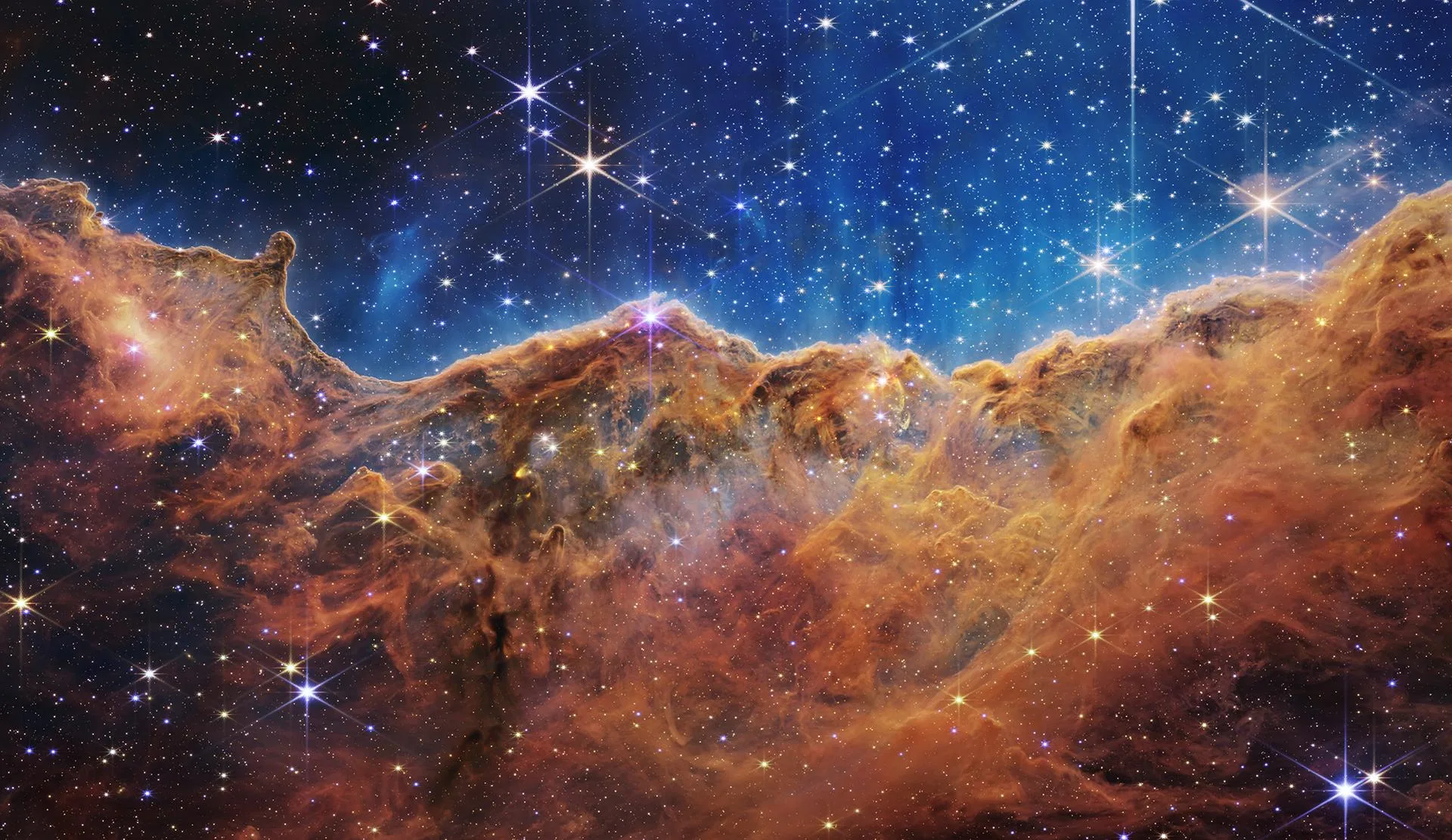
Stars form inside cold clouds of gas and dust. This is the edge of one, 7,600 light-years away. The hot young stars above the frame are wearing the cloud away with their light and winds, and uncovering newer stars as they go. Look along the top edge: that is a nursery being blown open.
The “Cosmic Cliffs” at the edge of the star-forming region NGC 3324 in the Carina Nebula, about 7,600 light-years away, in infrared light from the James Webb Space Telescope. Released on 12 July 2022. This light left the nebula about 7,600 years before the picture was taken. Image: NASA, ESA, CSA, STScI.
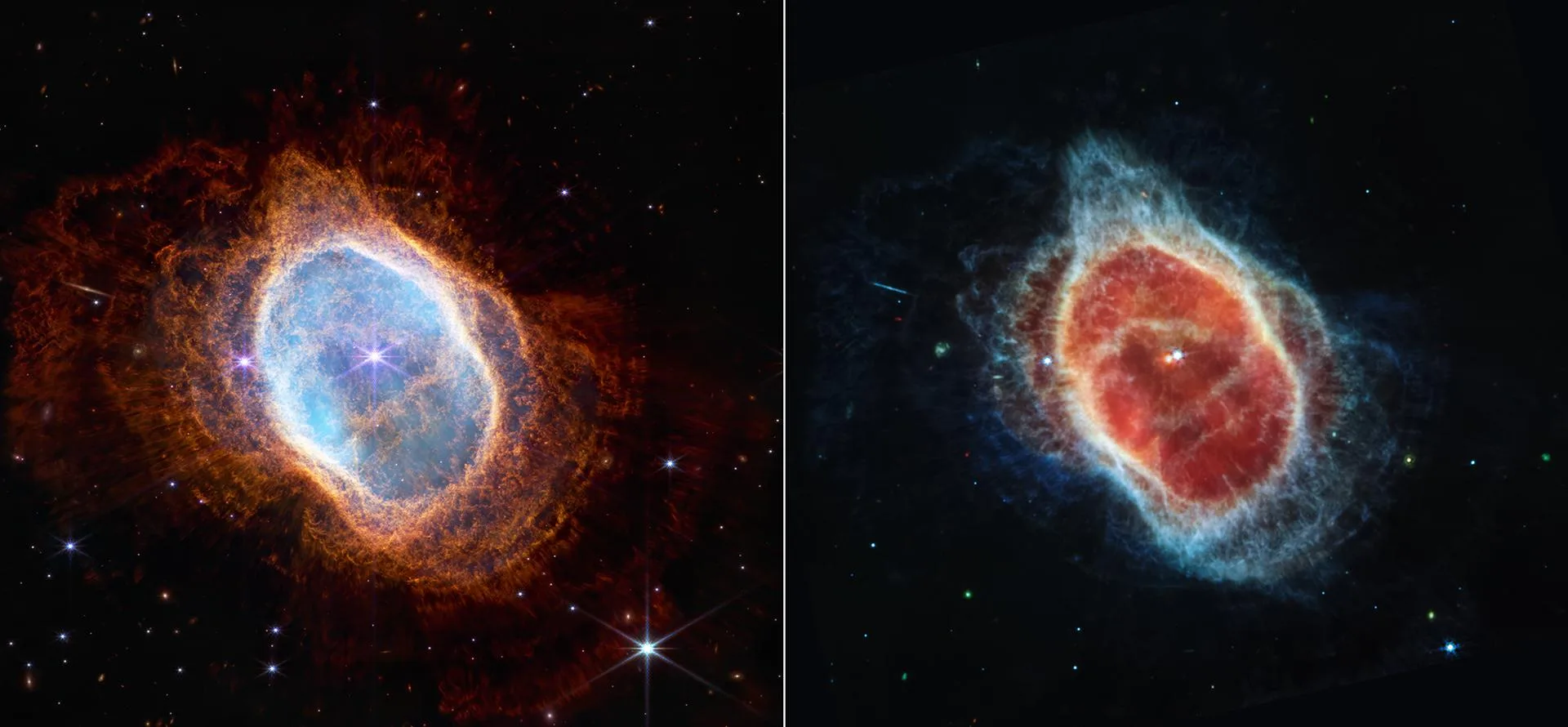
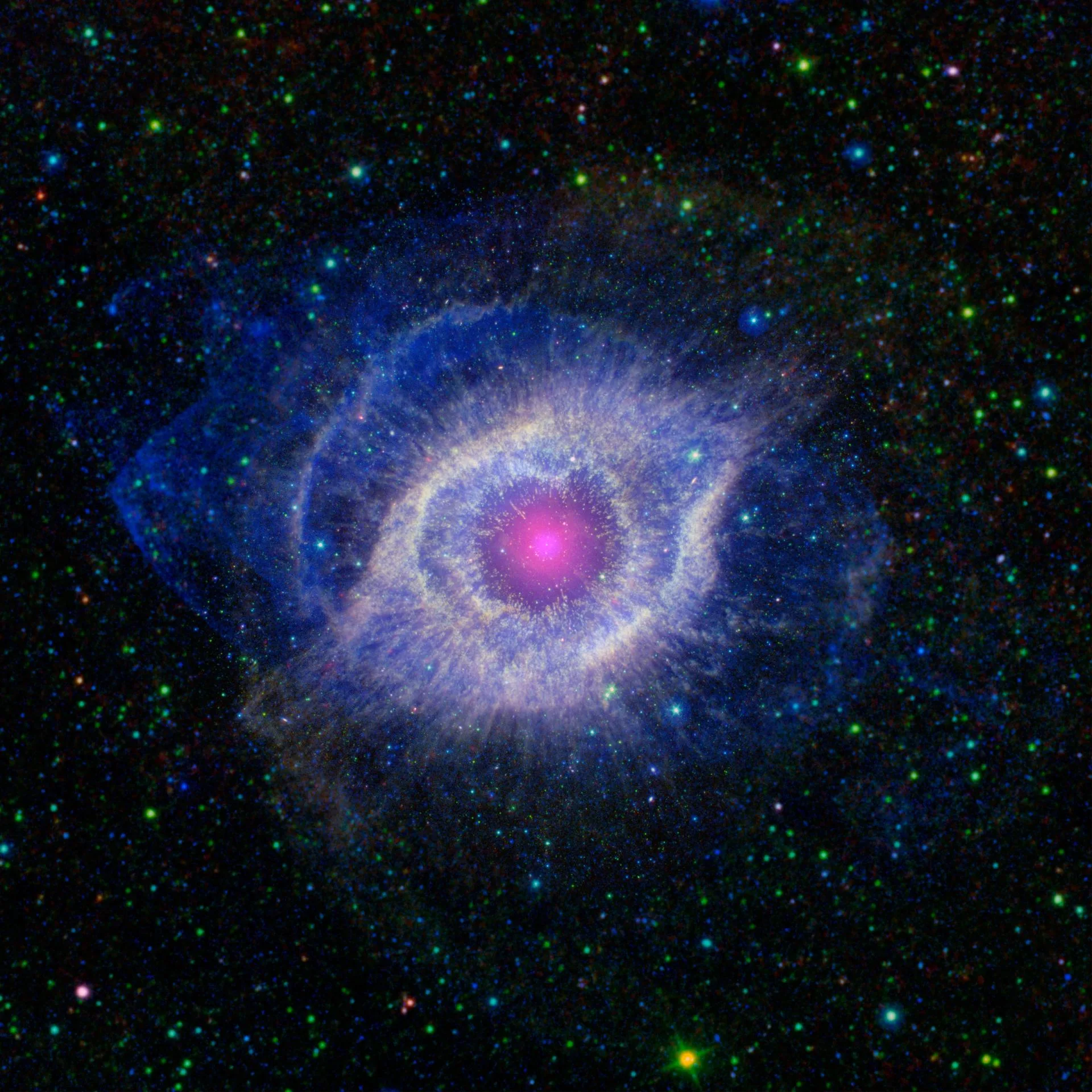
A star like the Sun ends quietly
It sheds its outer layers into space and leaves its hot core behind as a white dwarf, about the size of a planet. The Sun will do this too. Not soon.
Exploded
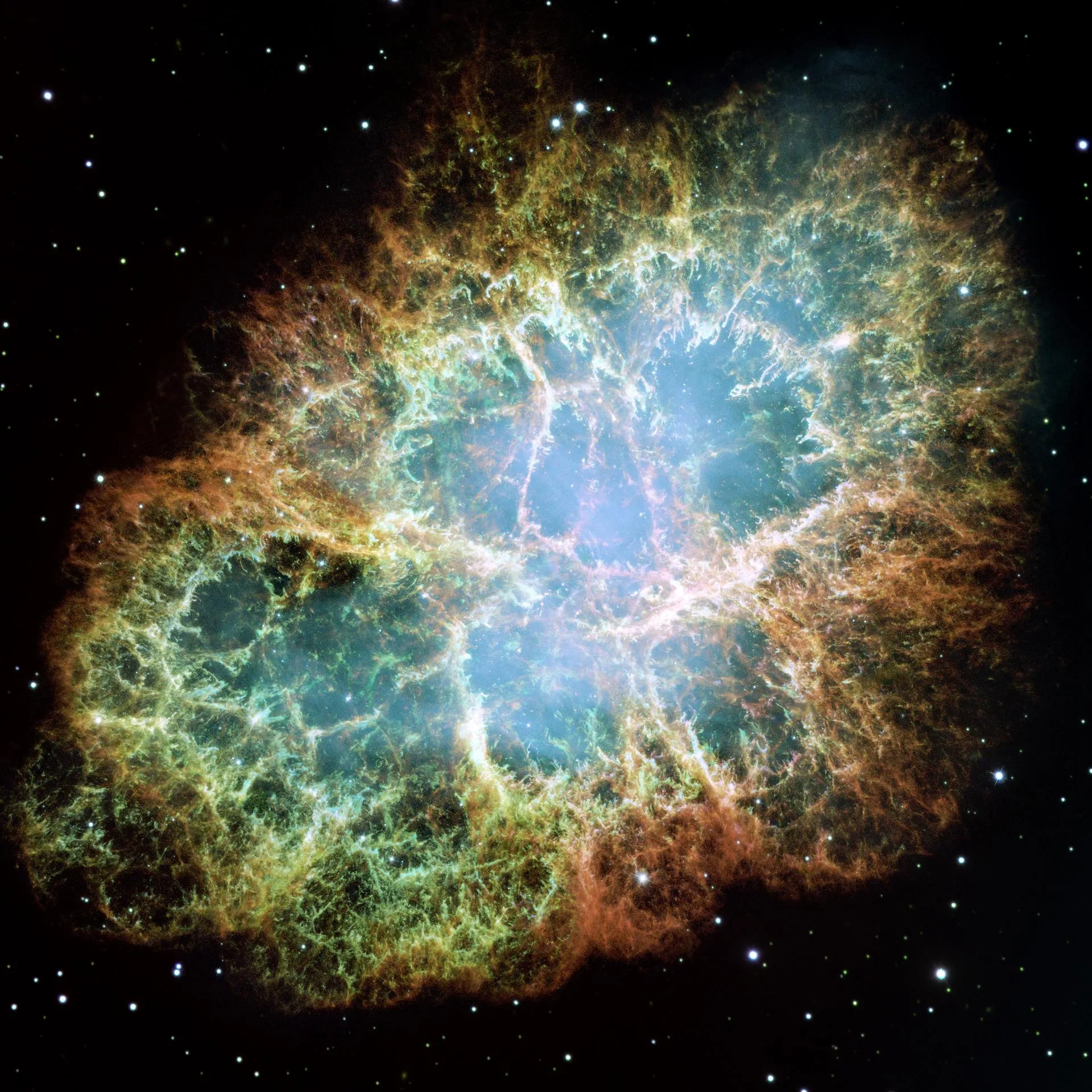
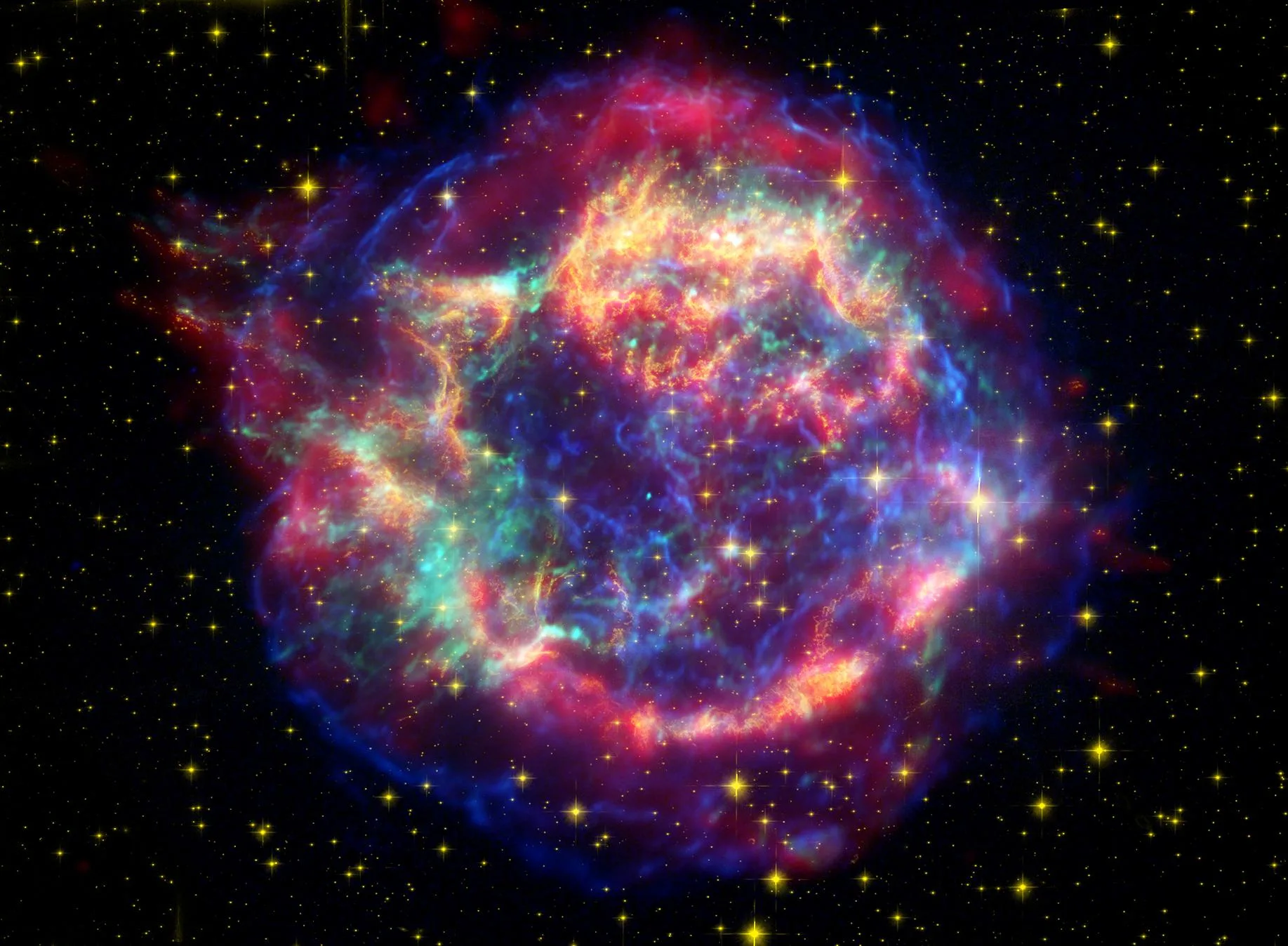
A star much heavier than the Sun ends in a supernova. People saw this one in the year 1054, and wrote it down, which is the important part. The cloud is the star’s wreckage, still spreading, and at its centre the core survives as a neutron star.
The Crab Nebula, assembled from 24 Hubble exposures. It is the wreck of a star whose explosion Chinese astronomers recorded in 1054, and lies 6,500 light-years away in Taurus. This light left the nebula about 6,500 years before the picture was taken. Image: NASA/ESA/JPL/Arizona State University.
What a supernova leaves
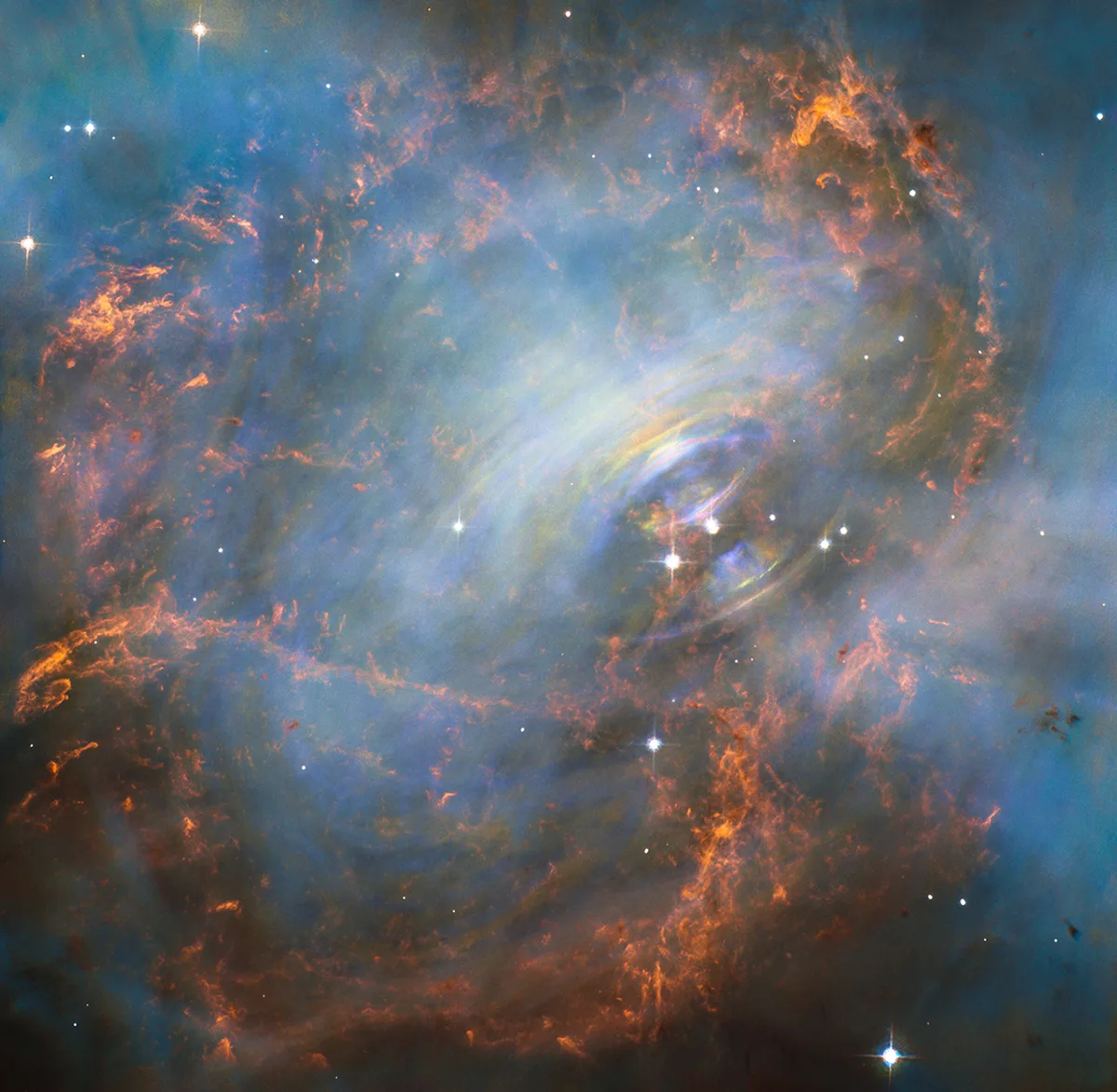
A neutron star has about the mass of the Sun in a ball some 20 km across. Read that again. I had to. The one in the Crab turns about 30 times a second and sweeps a radio beam past Earth on every turn: a pulsar.
Hear a pulsar spin
Five real pulsars ticking at their real rates, up to 716 turns a second.
Black hole, hands on
Heavier cores collapse further still. Drag a black hole across the stars and watch their light bend.
What would happen if you fell into a black hole
It depends on how big the hole is. Choose a big one.
The little red dots Webb found
Black holes that seem to have outgrown their young galaxies.